Primal Pursuit Humans vs Dinosaurs How to Survive as a Human
Stay mobile with teammates, loot the right items, and know when to shoot or run from the dinosaur.
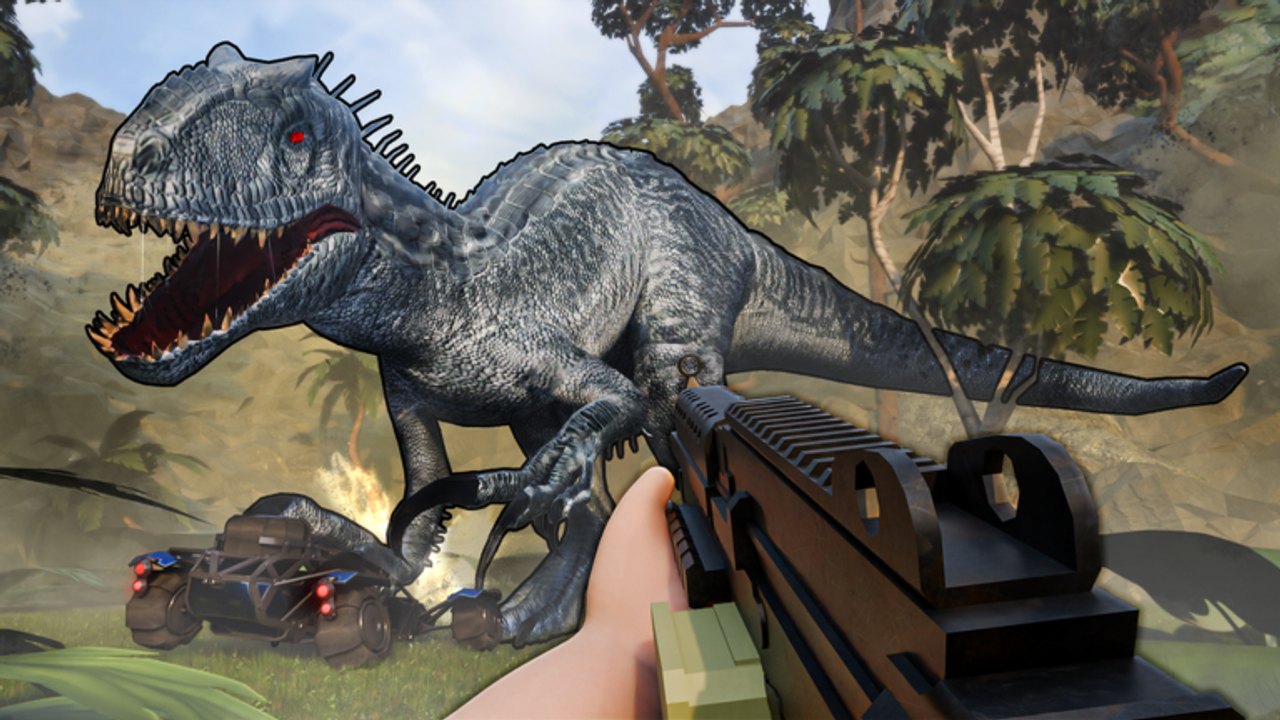
Surviving in Primal Pursuit Humans vs Dinosaurs is a team sport with a ticking clock. You are one of roughly ten humans against a single predator—or two during Double Trouble—and your practical goal is to stay alive long enough to use the lessons in How to Escape. This page focuses on teamwork, audio awareness, item spawns, kiting, and the fight-versus-flee decision tree. New accounts should also finish Getting Started for the group bonus and free ATV basics.
Teamwork beats hero plays
Solo players get isolated, dismounted, and deleted. Build habits that keep the lobby useful:
- Move in pairs or trios. Even weak pistols add up when two cars share a lane.
- Call the dinosaur’s last position in chat when you can. Information is as valuable as a medkit.
- Share loot roles. One player grabs fuel, another toolkits, another mines—do not all fight over the same crate.
- Peel for downed teammates when the dinosaur is distracted, but do not donate a second free kill into an active stomp.
- Converge for extraction. Mid-round splits are fine; final-minute splits to opposite hard pads usually fail.
If your lobby refuses to group, play the edge of whoever is making noise—gunfire attracts the dinosaur, which creates safe windows elsewhere for looting and rotations.
Sound cues that save lives
Audio is a radar:
- Footsteps and roars telegraph a nearby dinosaur even through foliage or snow.
- Sudden silence after a chase often means the predator turned toward you or crouched into an ambush line.
- Concentrated gunfire marks a fight you can either reinforce or avoid. Reinforcing with an ATV into a Giga’s mouth is not brave; reinforcing from range while the dinosaur focuses someone else is correct.
- Engine spam near a hill can warn you that a fortress pad is already contested.
Play with sound on. Visual-only players miss Raptors and other small dinos that slip into cheese spots.
Item spawns worth prioritizing
Maps hide repeatable utility. Train your eyes on structures, tents, crates, and path edges:
Mines
Mines punish chasing dinosaurs and complete common dailies. They often appear in buildings or on boxes. Advanced trick: start the place animation beside your car, enter the vehicle, and the mine can drop along your path—useful when you need multiple placements across a round. Seed mines on final approach roads before extraction; see also Bones Farm for quest value.
Oil barrels
Barrels line many pathways. Shoot them to create explosive traps, especially when paired with mines. Note that barrel damage may not count toward end-of-round MVP damage stats even though it helps fights and quests.
Medkits
Heal before you take a contested pad. Entering a helipad fight at half health invites a single bite to end your escape attempt. Keep medkits for post-chase recovery rather than panic-using them in the open without cover.
Dino trackers
Trackers reveal predator position—huge before the final rotation. Use them when sites appear or when the lobby has lost the dinosaur for too long. Do not burn a tracker thirty seconds into a quiet Jungle round.
Fuel cans and toolkits
These are survival items as much as escape items. A full tank lets you kite; a toolkit turns a smoking Humvee back into a fortress. Vehicles need both systems—read the vehicles tier list when upgrading past the ATV.
Green tents and marked bases on Jungle, Canyon, and Cavern are famous multi-loot nodes (mine + toolkit + medkit or tracker combinations). Learn two nodes per map via Maps.
Kiting without feeding
Kiting means dealing damage or wasting the dinosaur’s time while staying outside bite range:
- Keep the predator on your rear quarter, not glued to your bumper.
- Drift on PC (Space) to take tight turns without stopping.
- Exit to shoot only when the dinosaur is committed to another target or staggered by mines.
- Re-enter before the charge connects; foot tanking a Spino is not a plan.
- Use buildings and narrow lanes to break line of sight, then remount and leave.
The free ATV is poor at prolonged kiting against faster dinos—upgrade path toward Hot Rod-style speed or Humvee/MRAP armor depending on whether you prefer jukes or soak. Loadout pairing tips live under loadouts and Best Weapons.
When to fight versus when to flee
Fight when
- Multiple survivors already have angles and the dinosaur is distracted.
- You have a strong gun (AR, shotgun for close dismounts, LMG for large hitboxes) and a healthy vehicle nearby.
- Mines or oil are primed on the lane the dinosaur must take.
- You are buying time for teammates to board an extract and you can disengage after a magazine.
Flee when
- You are alone on an ATV against a healthy large dinosaur.
- Your car is smoking and no toolkit is in reach.
- Double Trouble means a second predator can collapse your hold.
- The team is already rotating to a pad and your duel would happen on the wrong half of the map.
- You hear an ability tell and you are clumped bumper-to-bumper.
Fighting every sighting drains ammo, health, and time. Escaping with mediocre damage still beats dying with a stylish MVP that never boarded.
Map-aware survival
- Jungle (easy) — Forgive mistakes; use open docks; practice item routes.
- Canyon (medium) — Watch fortress hills; do not stall mid-climb while shooting.
- Cavern (medium / snow-cave) — Rocky boat approaches strand cars; keep momentum and spare fuel.
- Primal Park (hard) — Longer paths punish bad info; use trackers and stick with the convoy. Details: Primal Park update.
Guns and the survival budget
A survivor with a mid-tier AR contributes more than a survivor with cosmetics. Climb the spending ladder in Best Weapons and confirm rankings on the weapons tier list. Against small dinos, accuracy matters more than spray; against large dinos, sustained DPS from LMGs or Miniguns (situational) shines if you have space to spool up.
Session checklist
- Confirm group 20% bonus still active and redeem codes.
- Equip best gun and car you own.
- On drop, hit a known loot node for mine + fuel + toolkit.
- Stay near at least one teammate.
- Take free damage only on safe angles.
- Before sites spawn, top off fuel and repair.
- Commit together to the smarter pad.
Use Controls if inputs still feel clumsy, and Tools for a prep checklist. Track account growth on progression.
Survival is not passive camping until the timer hits zero. It is disciplined movement, shared information, smart item use, and choosing fights that enable the boat or helicopter—not the highlight reel.
Frequently Asked Questions
Quick answers to the most common questions.
What items should survivors loot first?
Prioritize fuel cans and toolkits for mobility, then mines, medkits, and dino trackers based on your plan for the round.
How do sound cues help against the dinosaur?
Footsteps, roars, and gunfight audio reveal where the predator is committed so you can reinforce safely or rotate away.
When should I stop shooting and run?
Flee when you are isolated, your vehicle is nearly dead, Double Trouble pressure arrives, or the fight is on the wrong side of the map from extraction.
Do oil barrels help even if they miss MVP damage?
Yes. Barrels still create explosive pressure and progress daily quests even when they do not count toward MVP damage stats.
Is staying alone in a cheese spot a good survival plan?
Rarely. Small dinos can enter many spots, and hiding alone skips loot, quests, and coordinated escapes with your team.